




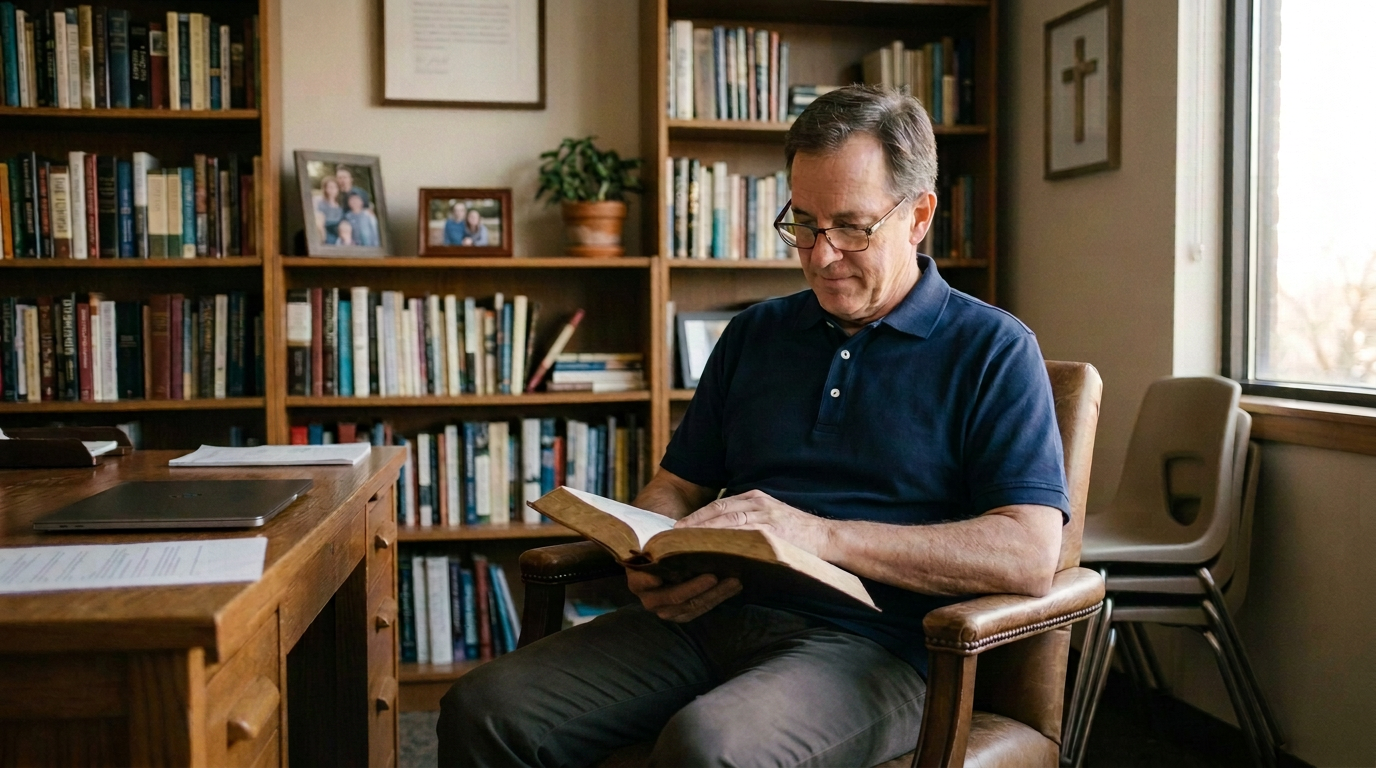
09 Oct Your Calling Is Greater Than Your Position by Pastor Pat Murray
One of the most important truths a pastor can embrace is that God’s calling is greater than any position we will ever hold. Titles change, responsibilities shift, and seasons of ministry come and go, but the purpose God places within us does not disappear when our assignment changes.
For many pastors, that truth is easier to preach than it is to live.
When you have spent decades loving people, preaching God’s Word, building a church, and carrying the responsibility of leadership, ministry becomes woven into nearly every part of your life. Your schedule, relationships, decisions, and even your sense of identity can become connected to the role you fulfill.
Then one day, God begins leading you into a different season.
After 36 years of pastoring Living Word Church, I transitioned the leadership of our congregation to my son, Joel. I knew it was the right decision, and I was genuinely excited about what God was doing through the next generation. Yet I also discovered that even a healthy transition requires personal adjustment.
For 36 years, I had been accustomed to carrying the final responsibility for major decisions. Suddenly, that responsibility belonged to someone else. The church still loved me, but people no longer needed to bring every question or concern to my office. Meetings that once filled my calendar were no longer mine to lead.
Those changes can reveal how much of our identity has become attached to what we do rather than who we are in Christ.
That is why pastors must remember that calling and position are not the same thing.
Our calling begins with belonging to Jesus Christ. Our assignments are opportunities to express that calling during particular seasons of life. A pastor may spend decades leading a congregation, but that does not mean the call of God ends when someone else becomes the senior pastor.
The Apostle Paul understood that ministry was not limited to one location or responsibility. His assignment changed repeatedly throughout his life. He preached in synagogues, planted churches, developed leaders, endured imprisonment, and wrote letters that continue strengthening believers today.
The circumstances surrounding his ministry changed, but his devotion to Christ remained constant.
In Philippians 3:13-14, Paul describes his determination to press forward toward the goal of God’s heavenly calling in Christ Jesus. His focus was not on preserving a particular position. It was on faithfully pursuing the purpose God had placed before him.
That perspective is essential when leadership responsibilities begin to change.
A pastor who finds identity primarily in being needed may struggle when others become capable of carrying the ministry forward. Yet developing people who no longer depend on us for every answer should be considered a tremendous success.
Ephesians 4:11-13 reminds us that God gives pastors and other ministry leaders to equip His people for works of service and help the body of Christ grow toward maturity.
Our assignment is not to make people permanently dependent on our leadership. It is to help them become spiritually mature, equipped, and confident in their own relationship with God.
When people begin seeking the Lord for themselves, discovering their gifts, and helping others grow, that is evidence that our leadership has been fruitful.
Second Timothy 2:2 reinforces this principle. Paul instructed Timothy to entrust what he had received to faithful people who could teach others. There is a beautiful picture of multiplication in that verse. One generation invests in another, which then prepares another generation to carry the Gospel forward.
If we are successful in that assignment, there should eventually be people capable of doing things we once believed only we could do.
That is not a loss. That is multiplication.
One of the greatest joys of my transition has been watching Joel and the leadership team carry the church forward. I have the opportunity to sit on the front row, celebrate what God is doing, and encourage the next generation as they step into responsibilities they have been prepared to fulfill.
But I have also learned that releasing leadership requires humility.
There are moments when I have to remind myself that I am no longer responsible for making every decision. I can offer encouragement and wisdom, but I must also respect the authority God has entrusted to the new leadership.
That adjustment is not always automatic. After decades of doing something one way, it takes intentional effort to embrace a different role.
For pastors approaching a transition, it is important to prepare emotionally and spiritually, not simply organizationally. A transition affects the pastor’s spouse and family as well. The routines, expectations, and relationships that have shaped family life may change significantly.
Those changes deserve honest conversations, prayer, and a willingness to trust God together.
The same Lord who guided us into our first ministry assignment is faithful to lead us into the next one.
For me, that next season includes giving greater attention to the Dayton Dream Center. As the outreach has grown, its responsibilities have increased. In 2025, the ministry recorded approximately 24,000 visits. The opportunity to invest more of my time and experience into that work has become an exciting part of this new chapter.
What once seemed like stepping away from one responsibility has created greater capacity to fulfill another.
That is something every pastor should consider. God may be preparing a new assignment that requires releasing something we have faithfully carried for years.
It may involve mentoring younger leaders, strengthening other churches, expanding community outreach, writing, teaching, or investing more intentionally in the next generation.
Sometimes it may simply involve learning to rest.
Pastors often become so accustomed to constant activity that rest feels uncomfortable. Yet rest is not evidence that our calling has diminished. It is part of trusting God with our lives and recognizing that the Kingdom does not depend on our constant activity.
As I have entered this season, I have begun considering opportunities to write, share lessons learned through decades of ministry, and invest my experience into leaders who are carrying responsibilities similar to those I once carried.
There is wisdom that comes only through years of walking with God. We should not allow that wisdom to remain unused simply because our position has changed.
The Kingdom needs seasoned leaders who are willing to become spiritual fathers and mothers, encouraging younger generations without demanding that everything continue to revolve around them.
Colossians 3:2 encourages believers to set their minds on things above rather than earthly things. That eternal perspective helps us recognize that our greatest success is not measured by the length of time we occupy a position, but by our faithfulness to God’s purpose.
If the church continues growing, people continue coming to Christ, and the next generation becomes stronger because of our investment, we have every reason to celebrate.
For pastors who are approaching a transition, experiencing a change in responsibility, or wondering what their next season might look like, remember this: God is not finished with you.
Your experience still matters. Your wisdom still matters. Your prayers, encouragement, and spiritual influence still matter.
You may no longer carry the same title or make the same decisions, but your ability to strengthen the Kingdom remains.
The call of God is not confined to a pulpit, an office, or a position on an organizational chart. It is expressed through a life surrendered to Jesus Christ.
Every season brings opportunities to serve Him, and every generation needs leaders who are willing to invest in what comes next.
The goal is not to remain in charge forever. The goal is to remain faithful for a lifetime.